Article chapters

Article chapters

Article chapters

Guides

How to Build a Therapy Practice Website on Squarespace

How to Build a Therapy Practice Website on Squarespace

Your website is your practice's first impression. Before a client ever sits across from you, they've already decided whether they trust you—based on what they saw online. Here's how to build a therapist website that earns that trust.

Your website is your practice's first impression. Before a client ever sits across from you, they've already decided whether they trust you—based on what they saw online. Here's how to build a therapist website that earns that trust.

Article summary

Your therapy practice website needs to do more than list your credentials—it needs to make potential clients feel safe before they've ever met you. This guide covers the essential pages every therapist website should include (homepage, about, services, contact, blog), design principles that build trust, common mistakes to avoid, how to choose the right Squarespace template, and SEO basics to help local clients find you. If you're starting from scratch or rebuilding, this is the roadmap.

Why your website matters more than you think

Most therapists treat their website like a digital business card. Name, credentials, phone number, done. But your website isn't a formality—it's the first therapeutic interaction a potential client has with you. The colors, the language, the structure, the feeling of the page—all of it communicates something about how it would feel to work with you.

A cluttered, overwhelming site tells a potential client that your practice might feel the same way. A calm, clear, intentionally designed site tells them you've thought carefully about their experience—before they've even booked a session.

The good news is that building a great therapy practice website doesn't require a design degree or a five-figure budget. It requires understanding what your site needs to do and making intentional choices about structure, content, and tone.

The pages every therapy practice website needs

Not every therapist needs the same number of pages. A solo practitioner just starting out has different needs than a group practice with multiple clinicians and specialties. But there's a core set of pages that virtually every therapy website should include.

Homepage

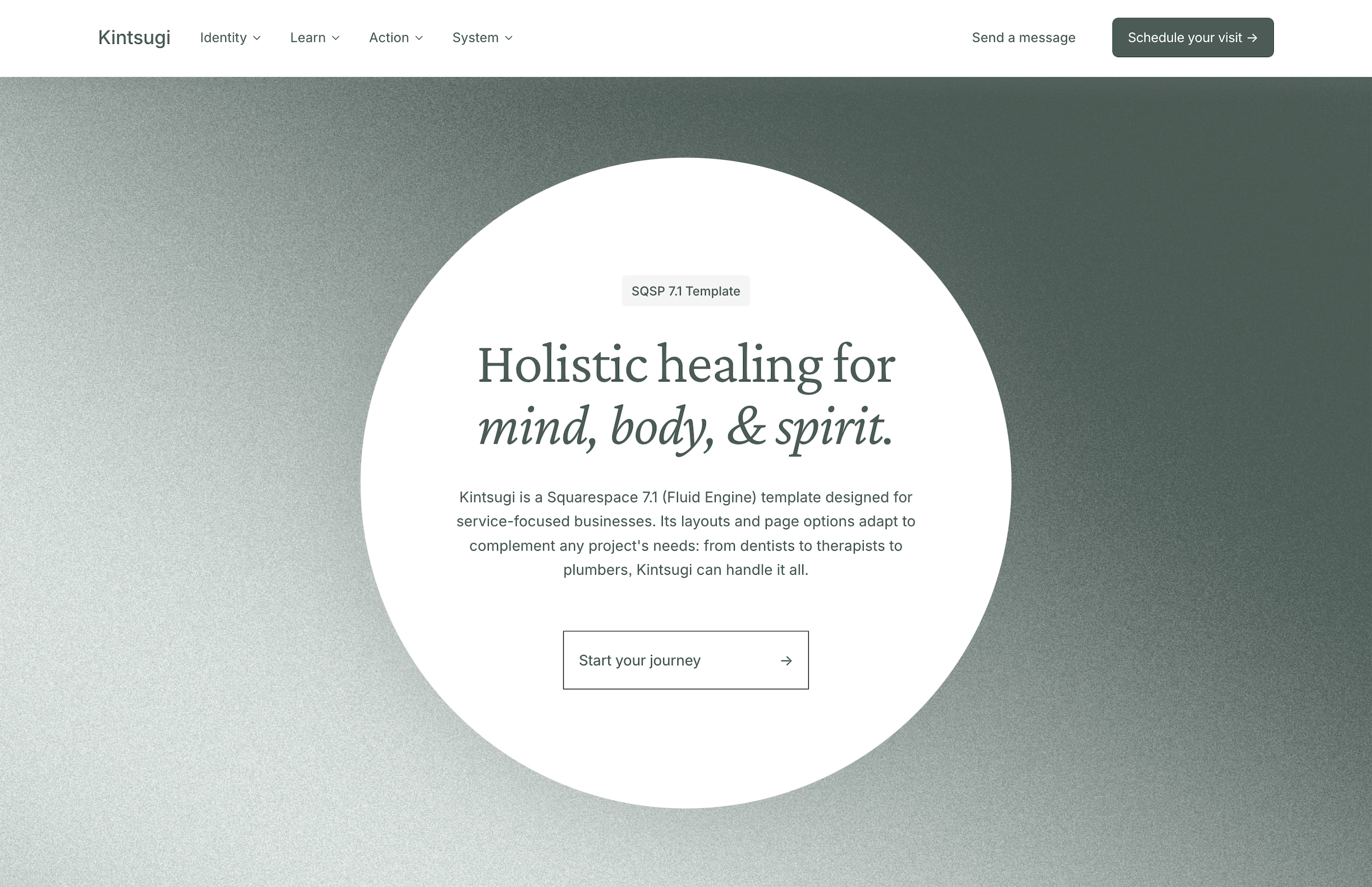
Your homepage has one job: help the right person feel like they've found the right therapist within seconds. That means leading with empathy, not credentials. A potential client landing on your site is usually anxious, uncertain, or in pain. They don't want to read your CV first, they want to feel understood.

A strong therapy homepage answers three questions in under five seconds: Who is this for? What do they help with? How do I take the next step?

Structure your homepage around those three things. A clear headline that speaks to the client's experience (not your methodology), a brief overview of who you work with and what you specialize in, and a visible call-to-action to book a consultation or learn more.


The homepage of Kintsugi for therapists — by Studio Mesa

About page

This is consistently one of the most-visited pages on any therapist's website. Clients want to know who you are before they open up to you—that's not vanity, it's due diligence.

Write your about page in first person. Use a warm, professional tone. Share your approach to therapy, your background, and what drew you to the work. Include a professional photo that feels approachable—not a stiff headshot.

A common mistake here is leading with a wall of credentials and certifications. Those matter, but they're not what builds connection. Lead with your story and philosophy, then follow with credentials as supporting evidence.

Services and specialties

This is where specificity wins. Instead of one generic "Services" page listing everything you do, consider creating individual pages for each specialty or modality. This serves two purposes: it helps potential clients self-identify ("this person specifically helps with what I'm dealing with") and it dramatically improves your search engine visibility.

A therapist who has a dedicated page for "EMDR Therapy in Portland" will rank far better for that search than one who mentions EMDR in a bullet point on a general services page.

For each service or specialty page, include:

  • A clear description of what the approach involves

  • Who it's best suited for

  • What a client can expect from the process

  • How to get started

Contact and scheduling

Make it absurdly easy to get in touch. Your contact page should include a simple form, your email, your phone number (if you accept calls), and your office location if you see clients in person.

If you use an online scheduling tool—and you should—embed it directly on your site rather than linking out to a third-party page. Squarespace integrates natively with Acuity Scheduling, which lets clients book consultations without ever leaving your website. Every extra click between "I want to reach out" and actually doing it is a chance for someone to lose momentum.

Blog or resources

A blog isn't mandatory, but it's one of the most effective long-term investments you can make in your practice's visibility. Writing about topics your ideal clients are searching for—anxiety management techniques, what to expect from your first therapy session, how to know if therapy is right for you—builds organic search traffic over time.

You don't need to publish weekly. Even one thoughtful post per month compounds significantly. And the content doesn't need to be clinical, just write the way you'd explain something to a client in plain language.

Additional pages worth considering

Depending on your practice, you might also want pages for:

  • Rates and insurance — Being transparent about fees reduces friction and filters for clients who are a good fit. List your session rates, whether you accept insurance, and whether you offer sliding scale options.

  • FAQ — Address the questions you get most often. How long are sessions? What's your cancellation policy? Do you offer virtual sessions? This saves time for both you and your clients.

  • Community or group programs — If you run group therapy, workshops, or community events, give them a dedicated page rather than burying them in your services list.

  • Courses or digital resources — Many therapists are expanding into online courses, workbooks, or guided programs. If that's part of your practice, build the page now—even if you're not offering anything yet—so the infrastructure is ready when you are.

  • Care plans — A page that outlines your therapeutic process from intake to ongoing care helps demystify the experience for new clients.


Design principles that build trust

Therapy website design isn't about trends or flash. It's about creating an environment that feels safe, calm, and professional—before a single word is read.

Color and tone

Stick to a muted, warm palette. Soft neutrals, earthy greens, gentle blues, and warm tans are common in therapy websites for a reason—they're calming. Avoid harsh contrasts, neon accents, or overly dark color schemes. The palette should feel like a waiting room you'd want to sit in.

Typography

Use no more than two typefaces. A clean sans-serif for body text ensures readability. A subtle serif for headings can add warmth and sophistication without feeling clinical. Avoid anything overly decorative or playful. Your typography should feel grounded and trustworthy.

Photography

Original photography is ideal, but not always practical. If you're using stock images, choose photos that feel authentic and diverse. Avoid the classic "person sitting on a couch looking pensive" stock photo that appears on every other therapist website. Look for imagery that reflects real moments, natural environments, and genuine human connection.

The most effective therapy websites use photography sparingly and intentionally. One strong hero image communicates more than a dozen mediocre ones.

White space

Don't be afraid of emptiness. White space isn't wasted space, it's breathing room. A page with generous spacing between sections feels calm and considered. A page crammed with text and images feels overwhelming—the opposite of what a therapy website should communicate.

What most therapist websites get wrong

After looking at hundreds of therapy practice websites, a few patterns emerge. These aren't design crimes, but they're missed opportunities that can cost you clients.

Leading with jargon

"I utilize an integrative, evidence-based approach combining CBT, DBT, and somatic experiencing modalities." That sentence means something to a clinician. To a potential client Googling "therapist near me who can help with anxiety," it's noise.

Write in the language your clients use, not the language your peers use. You can mention your modalities, but frame them in terms of what the client will experience, not what the technique is called.

Burying the call to action

If someone has to scroll to the bottom of a long page to find a "Book a Consultation" button, you've lost them. Your primary CTA should appear above the fold on your homepage, in your navigation, and at natural decision points throughout every page.

Trying to serve everyone

"I work with individuals, couples, families, teens, and children dealing with anxiety, depression, trauma, grief, ADHD, OCD, relationship issues, and life transitions." The impulse to cast a wide net is understandable, but a website that speaks to everyone connects with no one.

The most effective therapy websites speak directly to a specific type of client. You can still serve a broad range of people, but your website should lead with your ideal client and expand from there.

Neglecting mobile

More than half of your visitors are on their phones. If your site feels cramped, hard to navigate, or slow on mobile, you're losing potential clients before they've read a word. Every design decision should be tested on a phone screen, not just a desktop monitor.


Mobile screens on the Kintsugi template

Choosing the right platform and template

Squarespace is one of the most popular choices for therapy practice websites, and for good reason. The editor is drag-and-drop, the templates are professionally designed, mobile responsiveness is built in, and you don't need to manage plugins, updates, or security patches the way you would with WordPress.

What to look for in a template

Not all templates are created equal. When evaluating options for your therapy practice, look for:

  • Enough pages to support your full practice — Many templates only include 3-5 pages. A real therapy website needs more room than that: services, about, contact, blog, FAQ, and potentially care plans, community pages, or course pages.

  • Warm, grounded design direction — A template built for a tech startup or an ecommerce store is going to require significant reworking to feel right for a therapy practice. Start with something already in the right tonal neighborhood.

  • Clean navigation — Your site structure should be immediately obvious. No hamburger menus hiding critical pages, no clever navigation patterns that confuse visitors.

  • Built-in scheduling and contact integration — The easier it is for someone to book with you directly from the site, the better.

Starting from scratch vs. using a premium template

Squarespace's built-in free templates give you a blank canvas, but they require you to build out every page, choose every layout, and make every structural decision yourself. For many therapists, that freedom becomes paralysis—which is why the site never launches.

Premium third-party templates designed specifically for therapy practices can cut 10-20 hours off your build time. They come with the right pages already structured, the right design tone already established, and often include features like care plan pages, scheduling integration, and community sections that you'd otherwise have to figure out on your own.

Kintsugi is a Squarespace template designed specifically for therapists, counselors, and wellness practices. It includes 15 pages covering everything discussed in this article—from care plans and scheduling to testimonials, community, and a built-in course—with a warm, structured layout built around how therapy practices actually operate. If you want to see what a purpose-built option looks like, view the Kintsugi demo.

That said, a premium template isn't mandatory. If you enjoy the process of building and have a clear vision, you can absolutely create a strong therapy website from a free Squarespace template with the right amount of time and intention.

SEO basics for therapist websites

You don't need to become an SEO expert, but understanding a few fundamentals will help the right clients find you.

Local keywords matter

Most therapy clients search locally: "therapist in [city]," "anxiety therapist [neighborhood]," "couples counseling [city]." Make sure your city, neighborhood, and state appear naturally throughout your site—in page titles, headings, body text, and meta descriptions.

One page per specialty

As mentioned above, dedicated pages for each service or specialty dramatically improve your search visibility. A page titled "EMDR Therapy in Austin" with 300-500 words of relevant content will rank for that exact search far better than a bullet point on a general services page.

Write blog content your clients are searching for

Think about the questions your clients ask in intake sessions or early appointments. Those are the same things people are Googling. Write about them. "What to expect from your first therapy session," "How to know if you need couples counseling," "The difference between a therapist and a psychiatrist"—these are real searches with real volume.

For a deeper dive on getting your Squarespace site to rank, check out The Complete Guide to Squarespace SEO.


A realistic timeline for launching

Here's what a reasonable launch timeline looks like for a solo therapist building their own site:

Week 1 — Choose your platform and template. Set up your site. Outline your page structure and start gathering photography.

Week 2 — Write your homepage, about page, and services pages. This is usually the hardest part—not because the writing is complex, but because it requires you to articulate things about your practice you may not have put into words before. Give yourself grace here.

Week 3 — Build out your contact page, FAQ, and any additional pages. Set up your scheduling tool. Write your first blog post if you're planning to use one.

Week 4 — Review everything on mobile. Test your contact form. Ask a friend or colleague to navigate the site and tell you where they get confused. Make final adjustments and launch.

Three to four weeks is realistic. It doesn't need to be perfect on day one—it needs to be live. You can refine and improve over time. The biggest mistake most therapists make isn't launching a website that's imperfect. It's never launching one at all.


Start building

Your therapy practice deserves a website that works as hard as you do. Whether you build from scratch with a free Squarespace template or start with a purpose-built design like Kintsugi, the most important thing is to begin.

A clear, intentional website won't just help you find clients—it'll help the right clients find you.

Looking for more guidance on building effective websites on Squarespace? Explore 25 Best Practices for Building Sites with Squarespace or the Premium Squarespace Templates Buyer's Guide.

Article summary

Your therapy practice website needs to do more than list your credentials—it needs to make potential clients feel safe before they've ever met you. This guide covers the essential pages every therapist website should include (homepage, about, services, contact, blog), design principles that build trust, common mistakes to avoid, how to choose the right Squarespace template, and SEO basics to help local clients find you. If you're starting from scratch or rebuilding, this is the roadmap.

Why your website matters more than you think

Most therapists treat their website like a digital business card. Name, credentials, phone number, done. But your website isn't a formality—it's the first therapeutic interaction a potential client has with you. The colors, the language, the structure, the feeling of the page—all of it communicates something about how it would feel to work with you.

A cluttered, overwhelming site tells a potential client that your practice might feel the same way. A calm, clear, intentionally designed site tells them you've thought carefully about their experience—before they've even booked a session.

The good news is that building a great therapy practice website doesn't require a design degree or a five-figure budget. It requires understanding what your site needs to do and making intentional choices about structure, content, and tone.

The pages every therapy practice website needs

Not every therapist needs the same number of pages. A solo practitioner just starting out has different needs than a group practice with multiple clinicians and specialties. But there's a core set of pages that virtually every therapy website should include.

Homepage

Your homepage has one job: help the right person feel like they've found the right therapist within seconds. That means leading with empathy, not credentials. A potential client landing on your site is usually anxious, uncertain, or in pain. They don't want to read your CV first, they want to feel understood.

A strong therapy homepage answers three questions in under five seconds: Who is this for? What do they help with? How do I take the next step?

Structure your homepage around those three things. A clear headline that speaks to the client's experience (not your methodology), a brief overview of who you work with and what you specialize in, and a visible call-to-action to book a consultation or learn more.


The homepage of Kintsugi for therapists — by Studio Mesa

About page

This is consistently one of the most-visited pages on any therapist's website. Clients want to know who you are before they open up to you—that's not vanity, it's due diligence.

Write your about page in first person. Use a warm, professional tone. Share your approach to therapy, your background, and what drew you to the work. Include a professional photo that feels approachable—not a stiff headshot.

A common mistake here is leading with a wall of credentials and certifications. Those matter, but they're not what builds connection. Lead with your story and philosophy, then follow with credentials as supporting evidence.

Services and specialties

This is where specificity wins. Instead of one generic "Services" page listing everything you do, consider creating individual pages for each specialty or modality. This serves two purposes: it helps potential clients self-identify ("this person specifically helps with what I'm dealing with") and it dramatically improves your search engine visibility.

A therapist who has a dedicated page for "EMDR Therapy in Portland" will rank far better for that search than one who mentions EMDR in a bullet point on a general services page.

For each service or specialty page, include:

  • A clear description of what the approach involves

  • Who it's best suited for

  • What a client can expect from the process

  • How to get started

Contact and scheduling

Make it absurdly easy to get in touch. Your contact page should include a simple form, your email, your phone number (if you accept calls), and your office location if you see clients in person.

If you use an online scheduling tool—and you should—embed it directly on your site rather than linking out to a third-party page. Squarespace integrates natively with Acuity Scheduling, which lets clients book consultations without ever leaving your website. Every extra click between "I want to reach out" and actually doing it is a chance for someone to lose momentum.

Blog or resources

A blog isn't mandatory, but it's one of the most effective long-term investments you can make in your practice's visibility. Writing about topics your ideal clients are searching for—anxiety management techniques, what to expect from your first therapy session, how to know if therapy is right for you—builds organic search traffic over time.

You don't need to publish weekly. Even one thoughtful post per month compounds significantly. And the content doesn't need to be clinical, just write the way you'd explain something to a client in plain language.

Additional pages worth considering

Depending on your practice, you might also want pages for:

  • Rates and insurance — Being transparent about fees reduces friction and filters for clients who are a good fit. List your session rates, whether you accept insurance, and whether you offer sliding scale options.

  • FAQ — Address the questions you get most often. How long are sessions? What's your cancellation policy? Do you offer virtual sessions? This saves time for both you and your clients.

  • Community or group programs — If you run group therapy, workshops, or community events, give them a dedicated page rather than burying them in your services list.

  • Courses or digital resources — Many therapists are expanding into online courses, workbooks, or guided programs. If that's part of your practice, build the page now—even if you're not offering anything yet—so the infrastructure is ready when you are.

  • Care plans — A page that outlines your therapeutic process from intake to ongoing care helps demystify the experience for new clients.


Design principles that build trust

Therapy website design isn't about trends or flash. It's about creating an environment that feels safe, calm, and professional—before a single word is read.

Color and tone

Stick to a muted, warm palette. Soft neutrals, earthy greens, gentle blues, and warm tans are common in therapy websites for a reason—they're calming. Avoid harsh contrasts, neon accents, or overly dark color schemes. The palette should feel like a waiting room you'd want to sit in.

Typography

Use no more than two typefaces. A clean sans-serif for body text ensures readability. A subtle serif for headings can add warmth and sophistication without feeling clinical. Avoid anything overly decorative or playful. Your typography should feel grounded and trustworthy.

Photography

Original photography is ideal, but not always practical. If you're using stock images, choose photos that feel authentic and diverse. Avoid the classic "person sitting on a couch looking pensive" stock photo that appears on every other therapist website. Look for imagery that reflects real moments, natural environments, and genuine human connection.

The most effective therapy websites use photography sparingly and intentionally. One strong hero image communicates more than a dozen mediocre ones.

White space

Don't be afraid of emptiness. White space isn't wasted space, it's breathing room. A page with generous spacing between sections feels calm and considered. A page crammed with text and images feels overwhelming—the opposite of what a therapy website should communicate.


What most therapist websites get wrong

After looking at hundreds of therapy practice websites, a few patterns emerge. These aren't design crimes, but they're missed opportunities that can cost you clients.

Leading with jargon

"I utilize an integrative, evidence-based approach combining CBT, DBT, and somatic experiencing modalities." That sentence means something to a clinician. To a potential client Googling "therapist near me who can help with anxiety," it's noise.

Write in the language your clients use, not the language your peers use. You can mention your modalities, but frame them in terms of what the client will experience, not what the technique is called.

Burying the call to action

If someone has to scroll to the bottom of a long page to find a "Book a Consultation" button, you've lost them. Your primary CTA should appear above the fold on your homepage, in your navigation, and at natural decision points throughout every page.

Trying to serve everyone

"I work with individuals, couples, families, teens, and children dealing with anxiety, depression, trauma, grief, ADHD, OCD, relationship issues, and life transitions." The impulse to cast a wide net is understandable, but a website that speaks to everyone connects with no one.

The most effective therapy websites speak directly to a specific type of client. You can still serve a broad range of people, but your website should lead with your ideal client and expand from there.

Neglecting mobile

More than half of your visitors are on their phones. If your site feels cramped, hard to navigate, or slow on mobile, you're losing potential clients before they've read a word. Every design decision should be tested on a phone screen, not just a desktop monitor.


Mobile screens on the Kintsugi template

Choosing the right platform and template

Squarespace is one of the most popular choices for therapy practice websites, and for good reason. The editor is drag-and-drop, the templates are professionally designed, mobile responsiveness is built in, and you don't need to manage plugins, updates, or security patches the way you would with WordPress.

What to look for in a template

Not all templates are created equal. When evaluating options for your therapy practice, look for:

  • Enough pages to support your full practice — Many templates only include 3-5 pages. A real therapy website needs more room than that: services, about, contact, blog, FAQ, and potentially care plans, community pages, or course pages.

  • Warm, grounded design direction — A template built for a tech startup or an ecommerce store is going to require significant reworking to feel right for a therapy practice. Start with something already in the right tonal neighborhood.

  • Clean navigation — Your site structure should be immediately obvious. No hamburger menus hiding critical pages, no clever navigation patterns that confuse visitors.

  • Built-in scheduling and contact integration — The easier it is for someone to book with you directly from the site, the better.

Starting from scratch vs. using a premium template

Squarespace's built-in free templates give you a blank canvas, but they require you to build out every page, choose every layout, and make every structural decision yourself. For many therapists, that freedom becomes paralysis—which is why the site never launches.

Premium third-party templates designed specifically for therapy practices can cut 10-20 hours off your build time. They come with the right pages already structured, the right design tone already established, and often include features like care plan pages, scheduling integration, and community sections that you'd otherwise have to figure out on your own.

Kintsugi is a Squarespace template designed specifically for therapists, counselors, and wellness practices. It includes 15 pages covering everything discussed in this article—from care plans and scheduling to testimonials, community, and a built-in course—with a warm, structured layout built around how therapy practices actually operate. If you want to see what a purpose-built option looks like, view the Kintsugi demo.

That said, a premium template isn't mandatory. If you enjoy the process of building and have a clear vision, you can absolutely create a strong therapy website from a free Squarespace template with the right amount of time and intention.

SEO basics for therapist websites

You don't need to become an SEO expert, but understanding a few fundamentals will help the right clients find you.

Local keywords matter

Most therapy clients search locally: "therapist in [city]," "anxiety therapist [neighborhood]," "couples counseling [city]." Make sure your city, neighborhood, and state appear naturally throughout your site—in page titles, headings, body text, and meta descriptions.

One page per specialty

As mentioned above, dedicated pages for each service or specialty dramatically improve your search visibility. A page titled "EMDR Therapy in Austin" with 300-500 words of relevant content will rank for that exact search far better than a bullet point on a general services page.

Write blog content your clients are searching for

Think about the questions your clients ask in intake sessions or early appointments. Those are the same things people are Googling. Write about them. "What to expect from your first therapy session," "How to know if you need couples counseling," "The difference between a therapist and a psychiatrist"—these are real searches with real volume.

For a deeper dive on getting your Squarespace site to rank, check out The Complete Guide to Squarespace SEO.


A realistic timeline for launching

Here's what a reasonable launch timeline looks like for a solo therapist building their own site:

Week 1 — Choose your platform and template. Set up your site. Outline your page structure and start gathering photography.

Week 2 — Write your homepage, about page, and services pages. This is usually the hardest part—not because the writing is complex, but because it requires you to articulate things about your practice you may not have put into words before. Give yourself grace here.

Week 3 — Build out your contact page, FAQ, and any additional pages. Set up your scheduling tool. Write your first blog post if you're planning to use one.

Week 4 — Review everything on mobile. Test your contact form. Ask a friend or colleague to navigate the site and tell you where they get confused. Make final adjustments and launch.

Three to four weeks is realistic. It doesn't need to be perfect on day one—it needs to be live. You can refine and improve over time. The biggest mistake most therapists make isn't launching a website that's imperfect. It's never launching one at all.


Start building

Your therapy practice deserves a website that works as hard as you do. Whether you build from scratch with a free Squarespace template or start with a purpose-built design like Kintsugi, the most important thing is to begin.

A clear, intentional website won't just help you find clients—it'll help the right clients find you.

Looking for more guidance on building effective websites on Squarespace? Explore 25 Best Practices for Building Sites with Squarespace or the Premium Squarespace Templates Buyer's Guide.

Article summary

Your therapy practice website needs to do more than list your credentials—it needs to make potential clients feel safe before they've ever met you. This guide covers the essential pages every therapist website should include (homepage, about, services, contact, blog), design principles that build trust, common mistakes to avoid, how to choose the right Squarespace template, and SEO basics to help local clients find you. If you're starting from scratch or rebuilding, this is the roadmap.

Why your website matters more than you think

Most therapists treat their website like a digital business card. Name, credentials, phone number, done. But your website isn't a formality—it's the first therapeutic interaction a potential client has with you. The colors, the language, the structure, the feeling of the page—all of it communicates something about how it would feel to work with you.

A cluttered, overwhelming site tells a potential client that your practice might feel the same way. A calm, clear, intentionally designed site tells them you've thought carefully about their experience—before they've even booked a session.

The good news is that building a great therapy practice website doesn't require a design degree or a five-figure budget. It requires understanding what your site needs to do and making intentional choices about structure, content, and tone.

The pages every therapy practice website needs

Not every therapist needs the same number of pages. A solo practitioner just starting out has different needs than a group practice with multiple clinicians and specialties. But there's a core set of pages that virtually every therapy website should include.

Homepage

Your homepage has one job: help the right person feel like they've found the right therapist within seconds. That means leading with empathy, not credentials. A potential client landing on your site is usually anxious, uncertain, or in pain. They don't want to read your CV first, they want to feel understood.

A strong therapy homepage answers three questions in under five seconds: Who is this for? What do they help with? How do I take the next step?

Structure your homepage around those three things. A clear headline that speaks to the client's experience (not your methodology), a brief overview of who you work with and what you specialize in, and a visible call-to-action to book a consultation or learn more.


The homepage of Kintsugi for therapists — by Studio Mesa

About page

This is consistently one of the most-visited pages on any therapist's website. Clients want to know who you are before they open up to you—that's not vanity, it's due diligence.

Write your about page in first person. Use a warm, professional tone. Share your approach to therapy, your background, and what drew you to the work. Include a professional photo that feels approachable—not a stiff headshot.

A common mistake here is leading with a wall of credentials and certifications. Those matter, but they're not what builds connection. Lead with your story and philosophy, then follow with credentials as supporting evidence.

Services and specialties

This is where specificity wins. Instead of one generic "Services" page listing everything you do, consider creating individual pages for each specialty or modality. This serves two purposes: it helps potential clients self-identify ("this person specifically helps with what I'm dealing with") and it dramatically improves your search engine visibility.

A therapist who has a dedicated page for "EMDR Therapy in Portland" will rank far better for that search than one who mentions EMDR in a bullet point on a general services page.

For each service or specialty page, include:

  • A clear description of what the approach involves

  • Who it's best suited for

  • What a client can expect from the process

  • How to get started

Contact and scheduling

Make it absurdly easy to get in touch. Your contact page should include a simple form, your email, your phone number (if you accept calls), and your office location if you see clients in person.

If you use an online scheduling tool—and you should—embed it directly on your site rather than linking out to a third-party page. Squarespace integrates natively with Acuity Scheduling, which lets clients book consultations without ever leaving your website. Every extra click between "I want to reach out" and actually doing it is a chance for someone to lose momentum.

Blog or resources

A blog isn't mandatory, but it's one of the most effective long-term investments you can make in your practice's visibility. Writing about topics your ideal clients are searching for—anxiety management techniques, what to expect from your first therapy session, how to know if therapy is right for you—builds organic search traffic over time.

You don't need to publish weekly. Even one thoughtful post per month compounds significantly. And the content doesn't need to be clinical, just write the way you'd explain something to a client in plain language.

Additional pages worth considering

Depending on your practice, you might also want pages for:

  • Rates and insurance — Being transparent about fees reduces friction and filters for clients who are a good fit. List your session rates, whether you accept insurance, and whether you offer sliding scale options.

  • FAQ — Address the questions you get most often. How long are sessions? What's your cancellation policy? Do you offer virtual sessions? This saves time for both you and your clients.

  • Community or group programs — If you run group therapy, workshops, or community events, give them a dedicated page rather than burying them in your services list.

  • Courses or digital resources — Many therapists are expanding into online courses, workbooks, or guided programs. If that's part of your practice, build the page now—even if you're not offering anything yet—so the infrastructure is ready when you are.

  • Care plans — A page that outlines your therapeutic process from intake to ongoing care helps demystify the experience for new clients.


Design principles that build trust

Therapy website design isn't about trends or flash. It's about creating an environment that feels safe, calm, and professional—before a single word is read.

Color and tone

Stick to a muted, warm palette. Soft neutrals, earthy greens, gentle blues, and warm tans are common in therapy websites for a reason—they're calming. Avoid harsh contrasts, neon accents, or overly dark color schemes. The palette should feel like a waiting room you'd want to sit in.

Typography

Use no more than two typefaces. A clean sans-serif for body text ensures readability. A subtle serif for headings can add warmth and sophistication without feeling clinical. Avoid anything overly decorative or playful. Your typography should feel grounded and trustworthy.

Photography

Original photography is ideal, but not always practical. If you're using stock images, choose photos that feel authentic and diverse. Avoid the classic "person sitting on a couch looking pensive" stock photo that appears on every other therapist website. Look for imagery that reflects real moments, natural environments, and genuine human connection.

The most effective therapy websites use photography sparingly and intentionally. One strong hero image communicates more than a dozen mediocre ones.

White space

Don't be afraid of emptiness. White space isn't wasted space, it's breathing room. A page with generous spacing between sections feels calm and considered. A page crammed with text and images feels overwhelming—the opposite of what a therapy website should communicate.


What most therapist websites get wrong

After looking at hundreds of therapy practice websites, a few patterns emerge. These aren't design crimes, but they're missed opportunities that can cost you clients.

Leading with jargon

"I utilize an integrative, evidence-based approach combining CBT, DBT, and somatic experiencing modalities." That sentence means something to a clinician. To a potential client Googling "therapist near me who can help with anxiety," it's noise.

Write in the language your clients use, not the language your peers use. You can mention your modalities, but frame them in terms of what the client will experience, not what the technique is called.

Burying the call to action

If someone has to scroll to the bottom of a long page to find a "Book a Consultation" button, you've lost them. Your primary CTA should appear above the fold on your homepage, in your navigation, and at natural decision points throughout every page.

Trying to serve everyone

"I work with individuals, couples, families, teens, and children dealing with anxiety, depression, trauma, grief, ADHD, OCD, relationship issues, and life transitions." The impulse to cast a wide net is understandable, but a website that speaks to everyone connects with no one.

The most effective therapy websites speak directly to a specific type of client. You can still serve a broad range of people, but your website should lead with your ideal client and expand from there.

Neglecting mobile

More than half of your visitors are on their phones. If your site feels cramped, hard to navigate, or slow on mobile, you're losing potential clients before they've read a word. Every design decision should be tested on a phone screen, not just a desktop monitor.


Mobile screens on the Kintsugi template

Choosing the right platform and template

Squarespace is one of the most popular choices for therapy practice websites, and for good reason. The editor is drag-and-drop, the templates are professionally designed, mobile responsiveness is built in, and you don't need to manage plugins, updates, or security patches the way you would with WordPress.

What to look for in a template

Not all templates are created equal. When evaluating options for your therapy practice, look for:

  • Enough pages to support your full practice — Many templates only include 3-5 pages. A real therapy website needs more room than that: services, about, contact, blog, FAQ, and potentially care plans, community pages, or course pages.

  • Warm, grounded design direction — A template built for a tech startup or an ecommerce store is going to require significant reworking to feel right for a therapy practice. Start with something already in the right tonal neighborhood.

  • Clean navigation — Your site structure should be immediately obvious. No hamburger menus hiding critical pages, no clever navigation patterns that confuse visitors.

  • Built-in scheduling and contact integration — The easier it is for someone to book with you directly from the site, the better.

Starting from scratch vs. using a premium template

Squarespace's built-in free templates give you a blank canvas, but they require you to build out every page, choose every layout, and make every structural decision yourself. For many therapists, that freedom becomes paralysis—which is why the site never launches.

Premium third-party templates designed specifically for therapy practices can cut 10-20 hours off your build time. They come with the right pages already structured, the right design tone already established, and often include features like care plan pages, scheduling integration, and community sections that you'd otherwise have to figure out on your own.

Kintsugi is a Squarespace template designed specifically for therapists, counselors, and wellness practices. It includes 15 pages covering everything discussed in this article—from care plans and scheduling to testimonials, community, and a built-in course—with a warm, structured layout built around how therapy practices actually operate. If you want to see what a purpose-built option looks like, view the Kintsugi demo.

That said, a premium template isn't mandatory. If you enjoy the process of building and have a clear vision, you can absolutely create a strong therapy website from a free Squarespace template with the right amount of time and intention.

SEO basics for therapist websites

You don't need to become an SEO expert, but understanding a few fundamentals will help the right clients find you.

Local keywords matter

Most therapy clients search locally: "therapist in [city]," "anxiety therapist [neighborhood]," "couples counseling [city]." Make sure your city, neighborhood, and state appear naturally throughout your site—in page titles, headings, body text, and meta descriptions.

One page per specialty

As mentioned above, dedicated pages for each service or specialty dramatically improve your search visibility. A page titled "EMDR Therapy in Austin" with 300-500 words of relevant content will rank for that exact search far better than a bullet point on a general services page.

Write blog content your clients are searching for

Think about the questions your clients ask in intake sessions or early appointments. Those are the same things people are Googling. Write about them. "What to expect from your first therapy session," "How to know if you need couples counseling," "The difference between a therapist and a psychiatrist"—these are real searches with real volume.

For a deeper dive on getting your Squarespace site to rank, check out The Complete Guide to Squarespace SEO.


A realistic timeline for launching

Here's what a reasonable launch timeline looks like for a solo therapist building their own site:

Week 1 — Choose your platform and template. Set up your site. Outline your page structure and start gathering photography.

Week 2 — Write your homepage, about page, and services pages. This is usually the hardest part—not because the writing is complex, but because it requires you to articulate things about your practice you may not have put into words before. Give yourself grace here.

Week 3 — Build out your contact page, FAQ, and any additional pages. Set up your scheduling tool. Write your first blog post if you're planning to use one.

Week 4 — Review everything on mobile. Test your contact form. Ask a friend or colleague to navigate the site and tell you where they get confused. Make final adjustments and launch.

Three to four weeks is realistic. It doesn't need to be perfect on day one—it needs to be live. You can refine and improve over time. The biggest mistake most therapists make isn't launching a website that's imperfect. It's never launching one at all.


Start building

Your therapy practice deserves a website that works as hard as you do. Whether you build from scratch with a free Squarespace template or start with a purpose-built design like Kintsugi, the most important thing is to begin.

A clear, intentional website won't just help you find clients—it'll help the right clients find you.

Looking for more guidance on building effective websites on Squarespace? Explore 25 Best Practices for Building Sites with Squarespace or the Premium Squarespace Templates Buyer's Guide.

Design smarter, launch faster.

Studio Mesa makes Squarespace templates.

Templates for mission-driven businesses. All templates include 15 launch-ready pages, delivered instantly, with lifetime email support and an Unlimited License.

Subscribe

New template announcements

Design smarter, launch faster.

Studio Mesa makes Squarespace templates.

Templates for mission-driven businesses. All templates include 15 launch-ready pages, delivered instantly, with lifetime email support and an Unlimited License.

Subscribe

New template announcements

Design smarter, launch faster.

Studio Mesa makes Squarespace templates.

Templates for mission-driven businesses. All templates include 15 launch-ready pages, delivered instantly, with lifetime email support and an Unlimited License.

Subscribe

New template announcements