Why Squarespace works for law firms
Squarespace handles the technical foundation that most law firms need without requiring a developer on retainer. SSL certificates, mobile responsiveness, fast hosting, and clean URLs come standard. You're not managing plugins, security patches, or server configurations.
For solo practitioners and small firms especially, that matters. You don't have an IT department. You need a platform where you can update your bio, add a new practice area page, or publish a blog post without calling someone.
The limitation worth knowing: Squarespace doesn't have built-in client portals or case management integrations. If you need those, you'll connect third-party tools like Clio, MyCase, or LawPay through embeds or external links. That's standard across most website builders, and Squarespace handles it cleanly.
What to look for in a template
Not all templates are built with professional services in mind. A template designed for a restaurant or photographer might look beautiful, but it won't have the page structure, navigation patterns, or content hierarchy that a law firm needs. Here's what to evaluate.
Page count and structure
A law firm website needs more pages than most businesses. At minimum, you're looking at a homepage, about page, individual practice area pages, an attorney bio section, a results or case studies page, a blog, and a contact page. That's seven pages before you account for anything specific to your practice.
Most free Squarespace templates ship with three to five pages. That means you're building most of your site from scratch, which defeats the purpose of starting with a template. Look for templates with 10 or more pages that include service-oriented layouts you can repurpose for practice areas.
Navigation that scales
A solo practitioner might have four practice areas. A mid-size firm might have twelve, plus individual attorney pages, office locations, and resource sections. Your template's navigation needs to handle this without becoming cluttered.
Look for templates with dropdown menus, well-organized page hierarchies, or section-based navigation. If the demo site's menu only has four items and no dropdowns, consider how it'll look when you add eight more pages.
Content hierarchy on the homepage
Your homepage needs to communicate three things within the first few seconds: what type of law you practice, where you practice it, and how to contact you. A good template puts these front and center without requiring the visitor to scroll or hunt.
Templates built for service businesses tend to handle this better than portfolio or e-commerce templates. You want a clear headline area, a section for practice areas or services, social proof (testimonials, case results, awards), and a prominent call to action.
For more on structuring your homepage effectively, read Homepage Design Principles: What to Put Above the Fold.
Professional typography and color palette
Law firm websites need to project trust and competence. That typically means clean serif or refined sans-serif fonts, restrained color palettes, and plenty of white space. Templates with playful typography, bright accent colors, or heavy animation tend to undermine the credibility a legal practice needs.
Look at the template's demo site and ask: would a potential client take this seriously? If the design feels trendy or casual, it's probably not the right fit.
Pages every law firm website needs
Homepage
The homepage is your firm's elevator pitch in visual form. Lead with a clear statement of what you do and who you serve. Follow with practice areas, a brief credibility section (years of experience, case results, notable recognitions), and a contact prompt.
Avoid the temptation to put everything on the homepage. Its job is to orient visitors and route them to the right page, not to serve as an exhaustive overview of your entire practice.
Practice area pages
Each practice area deserves its own page. This is one of the most common mistakes on law firm websites: lumping all practice areas onto a single page with a short paragraph each.
Individual practice area pages let you write detailed, keyword-rich content that ranks in search. Someone searching "personal injury attorney Tampa" is far more likely to land on a dedicated personal injury page than a generic services overview. Each page should explain what the practice area involves, who it's for, what the process looks like, and how to get started.
If you want a deeper look at writing effective service pages, check out How to Create a Services Page That Converts.
Attorney bios
Every attorney at your firm needs a dedicated bio page, not just a headshot and a list of credentials on a team page. Potential clients want to know who they'll be working with. A strong bio includes a professional photo, education and bar admissions, practice focus, professional background, and something that makes the attorney feel like a real person.
Results or case studies
Prospective clients want evidence that you can deliver. A results page with case outcomes, settlements, or client success stories (anonymized where necessary) builds confidence. If your practice area allows it, this is one of the highest-converting pages on a law firm website.
Blog or resources section
A regularly updated blog serves two purposes. It helps your site rank for long-tail search queries related to your practice areas, and it gives potential clients a sense of your expertise before they ever pick up the phone. Write about questions your clients actually ask. Explain legal processes in plain language. Cover changes in the law that affect the people you serve.
For a comprehensive guide on making your blog work for search, read The Complete Guide to Squarespace SEO.
Contact page
Your contact page should be straightforward. Include your phone number, email, office address, hours, and a contact form. If you have multiple offices, list them clearly with individual addresses and phone numbers.
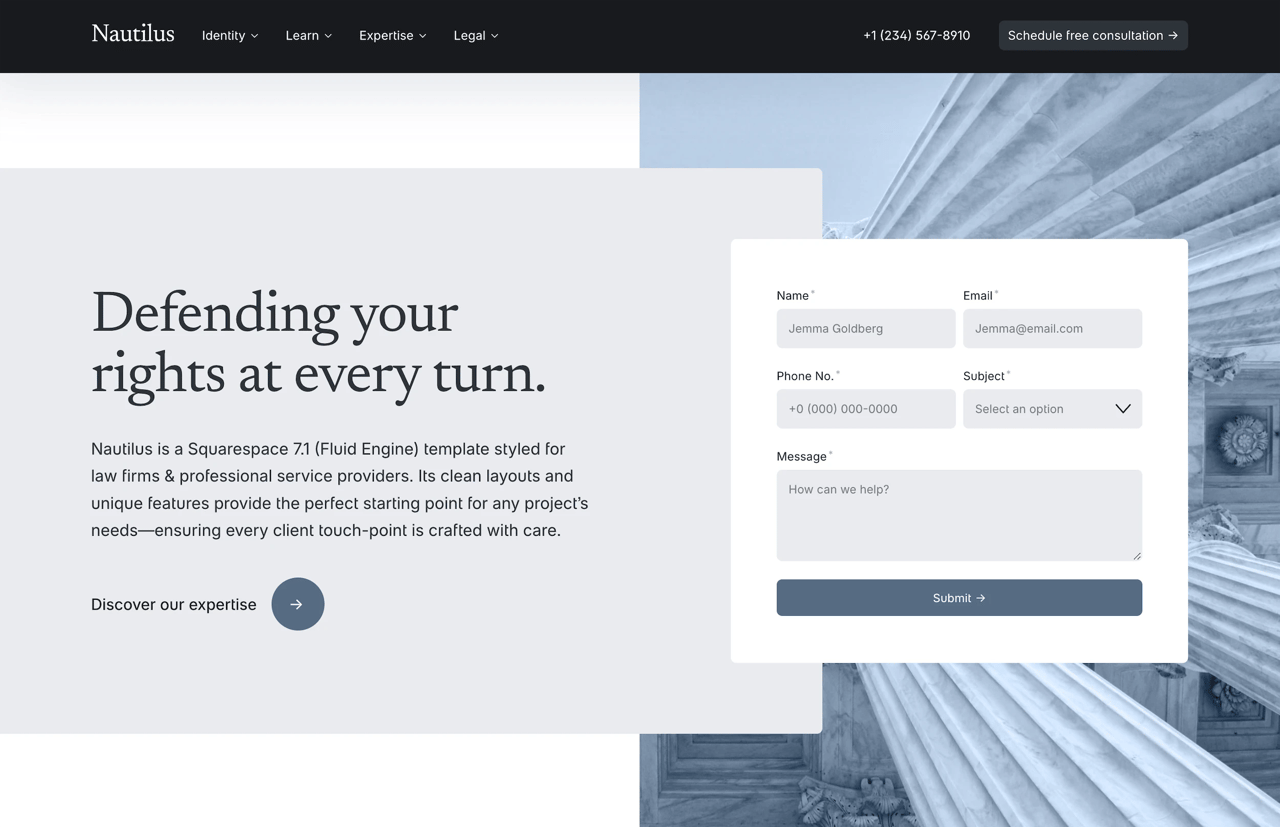
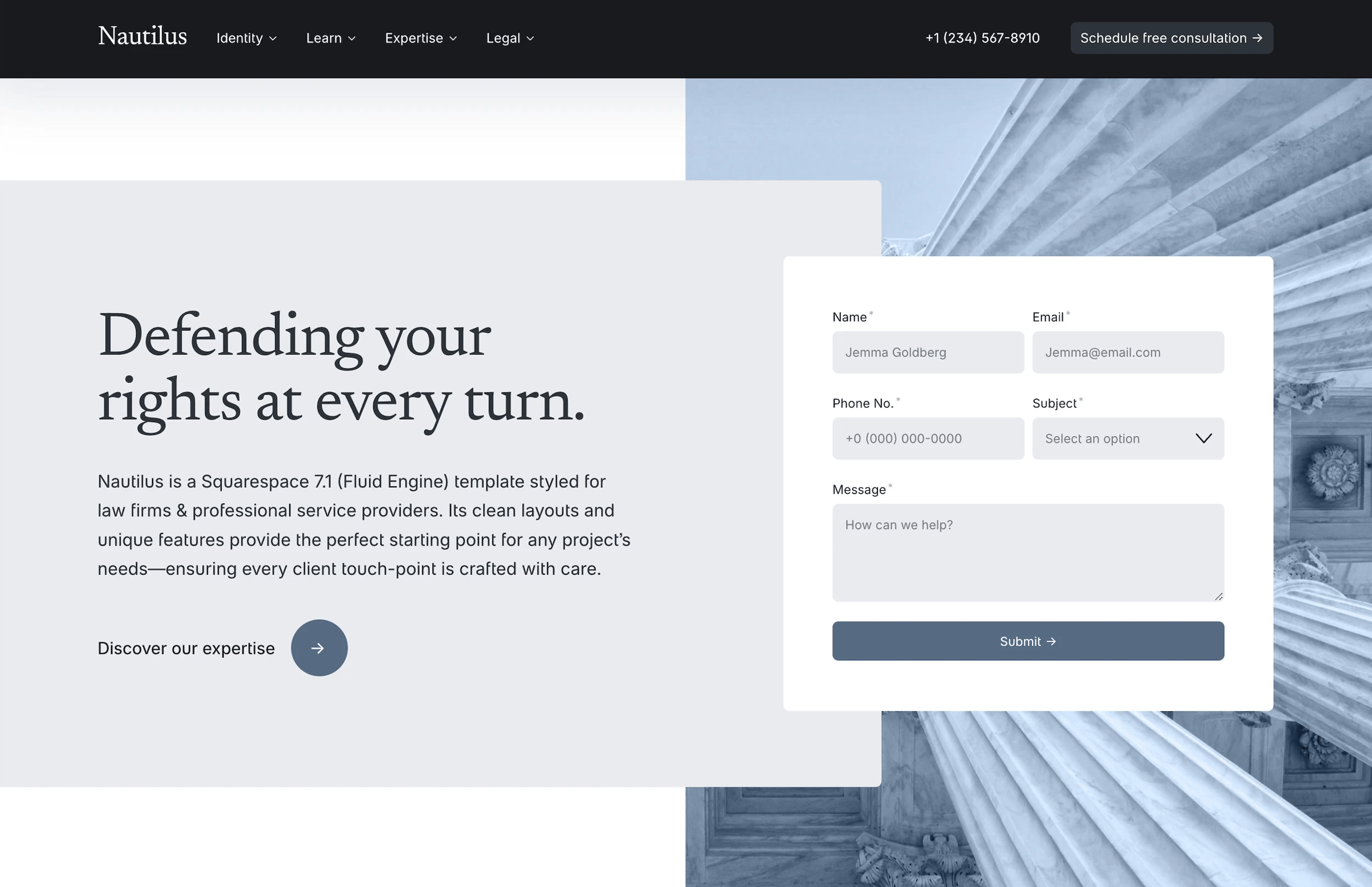
A well-designed contact form for a law firm should include a dropdown for the type of legal matter (matching your practice areas), which helps you route inquiries and respond with relevant information. For more on building effective forms, see How to Create a Contact Form That Actually Converts on Squarespace.