Your agency's portfolio website is often the first—and sometimes only—chance you get to prove you're worth hiring. While most agencies focus on flashy animations and award-winning visuals, the agencies that consistently win clients understand something deeper: great portfolio design is about strategy, not just aesthetics.
After analyzing hundreds of successful creative agency websites and building agency sites on Squarespace, I've identified the specific design strategies that turn visitors into qualified leads. This guide breaks down exactly what works, why it works, and how to implement these strategies in your own portfolio.
Why Creative Agency Website Design Makes or Breaks Your Business
The numbers tell a harsh truth. According to recent industry data, 75% of potential clients judge an agency's credibility based solely on their website design. You have about 50 milliseconds to make that first impression count. After that initial glance, visitors spend an average of just 54 seconds on agency websites before deciding whether to reach out or move on.
But here's what most agencies miss: winning creative agency website design isn't about impressing other designers. It's about demonstrating value to potential clients who are often stressed, pressed for time, and looking for someone they can trust with their brand.
The best agency websites balance three critical elements: showcasing creative excellence, proving business results, and making it incredibly easy for the right clients to take the next step. Get this balance wrong, and even the most visually stunning portfolio becomes just another pretty website that doesn't convert.
Essential Elements of High-Performing Agency Websites
Every successful creative agency website shares certain foundational elements. These aren't just nice-to-haves—they're the baseline requirements for competing in today's market.
Clear value proposition above the fold. Within three seconds of landing on your homepage, visitors should understand exactly what you do and who you do it for. Skip the creative wordplay. "We craft digital experiences that elevate brands" tells potential clients nothing. "Shopify websites for sustainable fashion brands" tells them everything.
Strategic portfolio presentation. Your best work should load instantly, display beautifully on all devices, and include context about the business challenge you solved. A grid of pretty pictures won't cut it anymore. Clients need to see the thinking behind the design.
Proof of results. Include specific metrics whenever possible. "Increased conversions by 47%" or "Reduced cart abandonment by 23%" speaks louder than any design award. If you can't share exact numbers due to NDAs, use ranges or percentages.
Accessible contact options. Make it ridiculously easy for potential clients to reach out. Include multiple contact methods, clearly display your location and timezone, and set expectations about response time. The easier you are to reach, the more likely you are to hear from serious prospects.
Current Design Trends in Agency Websites
While chasing trends rarely leads to timeless design, understanding what's currently resonating helps you make informed choices about your own site. Here's what's working in 2024 and beyond.
Minimalism with personality. Clean layouts dominate, but the best agencies add distinctive touches through typography, micro-animations, or unexpected color moments. The goal is memorable simplicity, not boring simplicity.
Dark mode as default. More agencies are launching with dark color schemes that make their portfolio work pop. When done well, dark interfaces feel premium and help colorful client work stand out.
Motion with purpose. Subtle animations guide attention and add polish, but the days of parallax everything are over. The best sites use motion sparingly—on scroll reveals, hover states, and key transitions.
Authentic team photography. Stock photos of people in glass offices pointing at whiteboards are out. Real photos of your actual team in your actual space build trust and show personality.
12 Outstanding Creative Agency Website Examples
Let's analyze specific agencies that get their website strategy right, examining what makes each one effective beyond just visual appeal.
1. Pentagram
The legendary design consultancy keeps it surprisingly simple. No flashy animations, just a clean grid of recent work that loads instantly. The magic is in the case study depth—each project includes extensive documentation of process and impact.
2. IDEO
IDEO's site reflects their human-centered design philosophy. Stories take center stage over portfolio pieces, showing how design thinking solves real problems. Their clear service offerings help potential clients self-select.
3. Fantasy Interactive
Fi balances experimental design with usability. Their portfolio showcases technical innovation while maintaining fast load times and intuitive navigation. The studio's personality shines through without overwhelming the work.
4. Huge Inc
Huge's website demonstrates their strategic thinking from the first interaction. Clear case studies include business context, creative solutions, and measurable outcomes. Their blog adds thought leadership without feeling like content marketing.
5. R/GA
R/GA's site architecture handles complexity well. Despite being a massive agency with diverse capabilities, their navigation remains intuitive. Each service area gets dedicated explanation without overwhelming visitors.
6. Studio Rodrigo
This smaller studio proves you don't need a huge portfolio to compete. By focusing on just six exceptional case studies with rich storytelling, they demonstrate expertise more effectively than agencies with dozens of shallow examples.
7. Active Theory
Known for pushing web technology boundaries, their own site showcases capabilities without sacrificing performance. Interactive elements enhance rather than distract from the content.
8. Instrument
Instrument's site nails the balance between showing creative work and demonstrating business value. Each case study leads with the client challenge before revealing the creative solution.
9. Mother Design
Mother's bold typography and generous white space create immediate impact. Their project presentation focuses on brand strategy, showing they think beyond just visual design.
10. Sagmeister & Walsh
True to their provocative style, the site takes risks that align with their brand. Not every agency could pull off their approach, but it perfectly attracts their ideal clients.
11. Ueno
Before their acquisition, Ueno's site perfectly balanced personality with professionalism. Their about page and team bios showed human beings behind the work, building connection with potential clients.
12. Basic Agency
Basic's site proves that digital-first agencies can still surprise. Their use of bold colors and experimental layouts attracts forward-thinking brands while maintaining usability.
Key Features That Convert Visitors to Clients
Beautiful design attracts attention, but specific features turn that attention into new business. Based on conversion data from successful agencies, these elements consistently drive inquiries.
Interactive project filters. Let visitors sort your work by industry, service type, or project scale. When prospects can quickly find relevant examples, they're more likely to reach out. Make sure your filtering system works flawlessly on mobile devices where many decision-makers browse.
Transparent process documentation. Show exactly how you work, from initial consultation through final delivery. Include timelines, team involvement, and client touchpoints. The more prospects understand your process, the more qualified your leads become.
Budget indicators. While most agencies avoid discussing price, giving some indication of project minimums or typical investment ranges helps both parties. You'll get fewer inquiries, but they'll be far more qualified.
Client testimonials with context. Generic praise means nothing. The best testimonials include the client's name, company, role, and specific results achieved. Video testimonials work even better if you can get them.
Live chat or booking system. Make it easy for prospects to either ask quick questions or schedule a consultation. Calendly integrations or simple chat widgets remove friction from the inquiry process.
Tools and Platforms for Building Agency Websites
Choosing the right platform impacts everything from design flexibility to ongoing maintenance. Here's how the main options stack up for creative agencies.
Squarespace offers the best balance for most agencies. The platform handles hosting, security, and updates automatically, letting you focus on design and content. With premium templates designed specifically for portfolios, you can launch faster without sacrificing quality. Custom code injection allows advanced customization when needed.
WordPress provides maximum flexibility but requires ongoing maintenance. If you have dedicated technical resources and need complex functionality, it's still a solid choice. Just factor in the time cost of updates, security, and plugin management.
Webflow sits between Squarespace and custom development. More design freedom than Squarespace, less maintenance than WordPress. The learning curve is steeper, but the visual development environment appeals to designers.
Custom development makes sense for agencies showcasing technical capabilities or needing unique functionality. The investment is significant, both upfront and ongoing, so make sure it aligns with your business goals.
Pro tip: Your platform choice should support your business, not become another project to manage. Most agencies benefit more from a solid platform they can update quickly than a custom build that requires developer involvement for every change.
Design Principles and Best Practices
Beyond specific features and platform choices, certain design principles consistently produce better results for creative agency websites.
Performance over polish. A simple site that loads in under two seconds will outperform a visually stunning site that takes five seconds to display. Optimize every image, lazy load below-the-fold content, and test thoroughly on slower connections.
Mobile-first thinking. Over 60% of agency site traffic comes from mobile devices, often during commutes or between meetings. Your mobile experience should be as polished as desktop, not an afterthought.
Accessibility as standard. Beyond being the right thing to do, accessible design expands your potential client base and improves SEO. Use semantic HTML, ensure sufficient color contrast, and test with screen readers.
Content strategy before visual design. Know what story you're telling before deciding how to tell it. Your messaging strategy should drive design decisions, not the other way around.
Regular portfolio updates. Nothing undermines credibility faster than a "recent work" section showing projects from three years ago. Set a quarterly reminder to refresh your portfolio with current work.
How to Make Your Agency Website Stand Out
In a sea of similar-looking agency sites, differentiation comes from authentic positioning and flawless execution of fundamentals.
Define your viewpoint. The best agencies have a perspective on their work and industry. Share your design philosophy, business beliefs, or unique approach. Clients hire agencies for their thinking as much as their output.
Show work in progress. While everyone shows finished projects, sharing process shots, sketches, or development stages demonstrates how you think through problems. This transparency builds trust with potential clients.
Feature your failures. Every agency has projects that didn't go as planned. Thoughtfully discussing what you learned from challenging projects shows maturity and honesty that clients value.
Invest in copywriting. Most agencies nail the visual design but phone in the writing. Clear, compelling copy that speaks directly to client needs will set you apart more than any design trick.
Create valuable resources. Whether it's guides for better business writing or tools that solve client problems, giving away genuine value attracts the right prospects.
Measuring Success and Continuous Improvement
Your agency website is never truly finished. The best agencies treat their sites as living projects that evolve based on data and feedback.
Track these key metrics: visitor-to-inquiry conversion rate, average time on site, portfolio engagement rates, and most importantly, the quality of leads generated. Use tools like Google Analytics, Hotjar for heat mapping, and your CRM to connect website visits to actual new business.
A/B test significant changes, especially to your homepage and contact forms. Small improvements in conversion rate translate directly to revenue. Just remember to test one element at a time and give each test sufficient time to gather meaningful data.
Collect feedback from both prospects and clients about your website. What convinced them to reach out? What almost stopped them? This qualitative data often reveals insights analytics miss.
Taking Action on Your Creative Agency Website Design
Great creative agency website design balances so many elements: stunning visuals that load quickly, clear messaging that speaks to client needs, easy navigation that works on all devices, and conversion features that generate qualified leads.
Start with an honest audit of your current site. Does it clearly communicate your value? Does it showcase your best, most recent work? Does it make it easy for ideal clients to get in touch? Address the biggest gaps first.
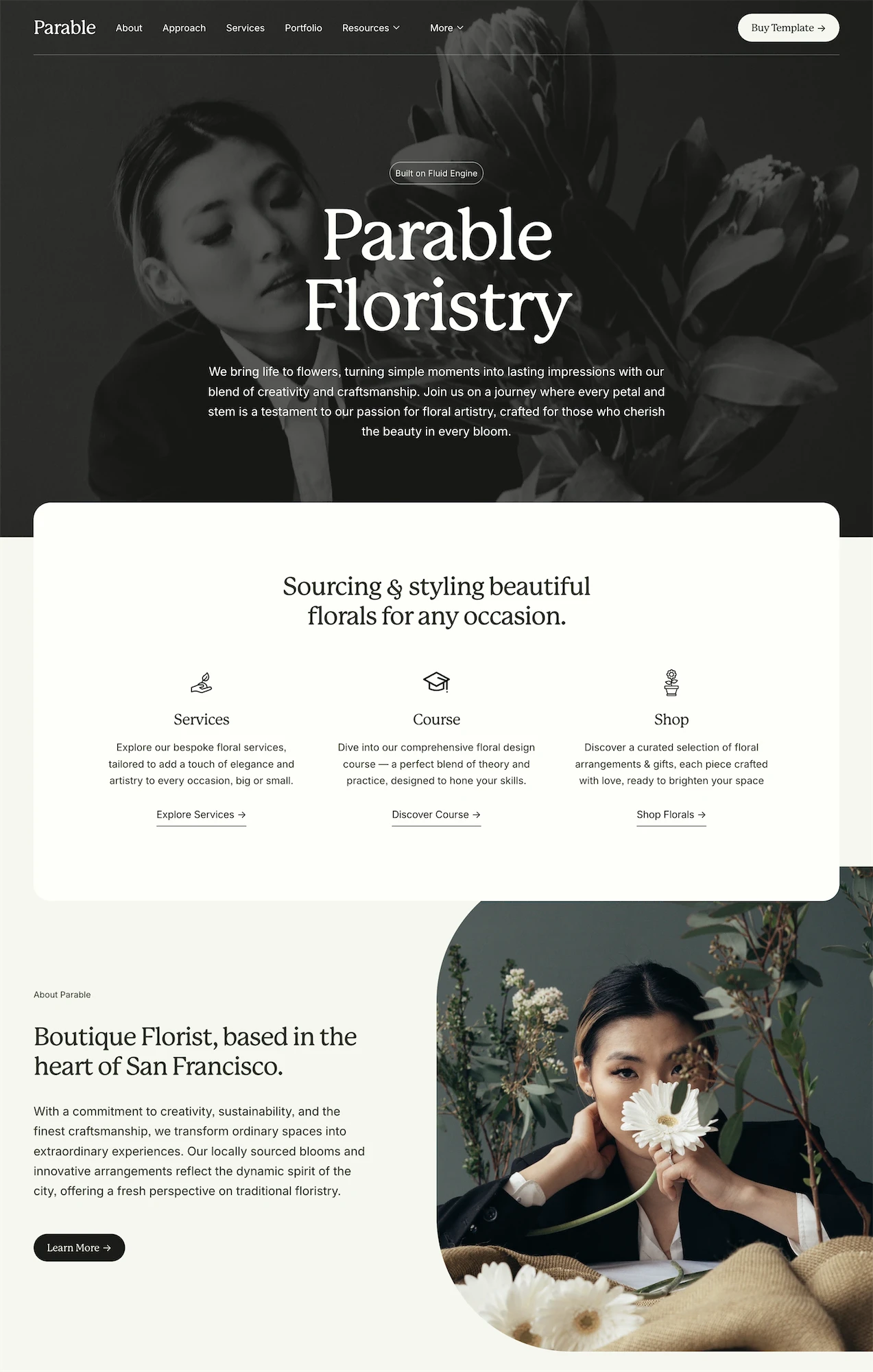
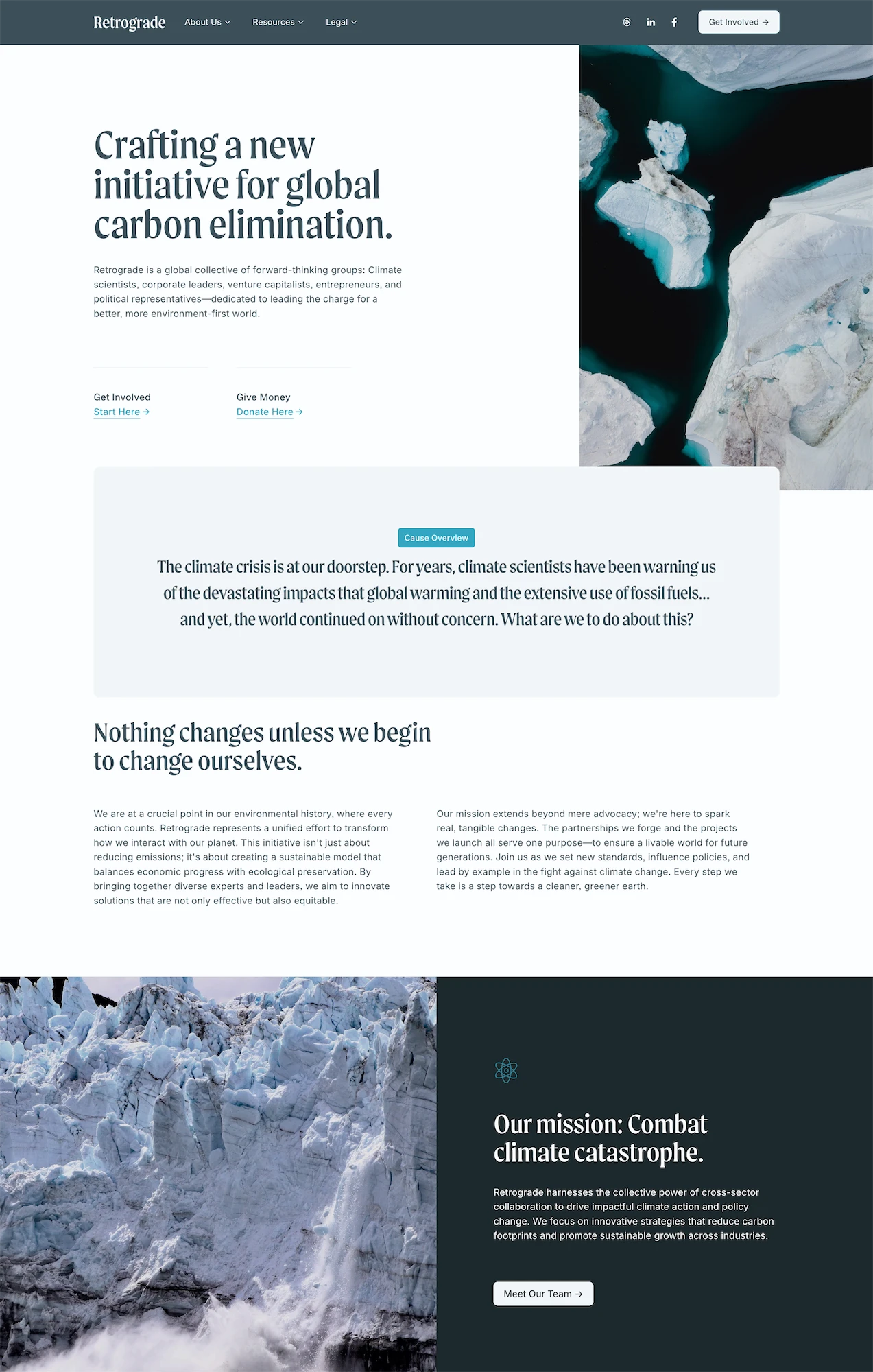
If you're building from scratch or ready for a complete refresh, consider starting with a proven foundation. Templates like Parable or Retrograde provide professional layouts optimized for creative portfolios, letting you focus on customizing with your brand and content rather than building from zero.
Remember, your website is often your most valuable business development tool. Invest in it accordingly, whether that's time, money, or both. The agencies winning the best clients understand this and act on it.
FAQ
How often should I update my agency's portfolio?
Add new work at least quarterly, and remove anything older than two years unless it's truly exceptional. Fresh work shows you're active and evolving. Set calendar reminders to review and refresh your portfolio regularly.
Should my agency website include pricing information?
While specific project prices rarely make sense, including budget ranges or minimum project sizes helps qualify leads. Try language like "Most website projects range from $15K-50K" to set appropriate expectations.
What's the ideal number of case studies to showcase?
Quality beats quantity. Six to twelve deep, well-documented case studies outperform dozens of shallow examples. Each case study should tell a complete story: challenge, process, solution, and results.
How important is page speed for agency websites?
Critical. Aim for under two seconds load time. Use tools like Google PageSpeed Insights to identify issues. Compress images, minimize code, and consider a CDN. Fast sites rank better and convert better.
Should we build our own site or hire another agency?
Building your own site proves capabilities but often takes longer than expected. If you go DIY, set strict deadlines and avoid endless perfection. Sometimes hiring another agency lets you focus on client work while getting fresh perspective on your positioning.
Your agency's portfolio website is often the first—and sometimes only—chance you get to prove you're worth hiring. While most agencies focus on flashy animations and award-winning visuals, the agencies that consistently win clients understand something deeper: great portfolio design is about strategy, not just aesthetics.
After analyzing hundreds of successful creative agency websites and building agency sites on Squarespace, I've identified the specific design strategies that turn visitors into qualified leads. This guide breaks down exactly what works, why it works, and how to implement these strategies in your own portfolio.
Why Creative Agency Website Design Makes or Breaks Your Business
The numbers tell a harsh truth. According to recent industry data, 75% of potential clients judge an agency's credibility based solely on their website design. You have about 50 milliseconds to make that first impression count. After that initial glance, visitors spend an average of just 54 seconds on agency websites before deciding whether to reach out or move on.
But here's what most agencies miss: winning creative agency website design isn't about impressing other designers. It's about demonstrating value to potential clients who are often stressed, pressed for time, and looking for someone they can trust with their brand.
The best agency websites balance three critical elements: showcasing creative excellence, proving business results, and making it incredibly easy for the right clients to take the next step. Get this balance wrong, and even the most visually stunning portfolio becomes just another pretty website that doesn't convert.
Essential Elements of High-Performing Agency Websites
Every successful creative agency website shares certain foundational elements. These aren't just nice-to-haves—they're the baseline requirements for competing in today's market.
Clear value proposition above the fold. Within three seconds of landing on your homepage, visitors should understand exactly what you do and who you do it for. Skip the creative wordplay. "We craft digital experiences that elevate brands" tells potential clients nothing. "Shopify websites for sustainable fashion brands" tells them everything.
Strategic portfolio presentation. Your best work should load instantly, display beautifully on all devices, and include context about the business challenge you solved. A grid of pretty pictures won't cut it anymore. Clients need to see the thinking behind the design.
Proof of results. Include specific metrics whenever possible. "Increased conversions by 47%" or "Reduced cart abandonment by 23%" speaks louder than any design award. If you can't share exact numbers due to NDAs, use ranges or percentages.
Accessible contact options. Make it ridiculously easy for potential clients to reach out. Include multiple contact methods, clearly display your location and timezone, and set expectations about response time. The easier you are to reach, the more likely you are to hear from serious prospects.
Current Design Trends in Agency Websites
While chasing trends rarely leads to timeless design, understanding what's currently resonating helps you make informed choices about your own site. Here's what's working in 2024 and beyond.
Minimalism with personality. Clean layouts dominate, but the best agencies add distinctive touches through typography, micro-animations, or unexpected color moments. The goal is memorable simplicity, not boring simplicity.
Dark mode as default. More agencies are launching with dark color schemes that make their portfolio work pop. When done well, dark interfaces feel premium and help colorful client work stand out.
Motion with purpose. Subtle animations guide attention and add polish, but the days of parallax everything are over. The best sites use motion sparingly—on scroll reveals, hover states, and key transitions.
Authentic team photography. Stock photos of people in glass offices pointing at whiteboards are out. Real photos of your actual team in your actual space build trust and show personality.
12 Outstanding Creative Agency Website Examples
Let's analyze specific agencies that get their website strategy right, examining what makes each one effective beyond just visual appeal.
1. Pentagram
The legendary design consultancy keeps it surprisingly simple. No flashy animations, just a clean grid of recent work that loads instantly. The magic is in the case study depth—each project includes extensive documentation of process and impact.
2. IDEO
IDEO's site reflects their human-centered design philosophy. Stories take center stage over portfolio pieces, showing how design thinking solves real problems. Their clear service offerings help potential clients self-select.
3. Fantasy Interactive
Fi balances experimental design with usability. Their portfolio showcases technical innovation while maintaining fast load times and intuitive navigation. The studio's personality shines through without overwhelming the work.
4. Huge Inc
Huge's website demonstrates their strategic thinking from the first interaction. Clear case studies include business context, creative solutions, and measurable outcomes. Their blog adds thought leadership without feeling like content marketing.
5. R/GA
R/GA's site architecture handles complexity well. Despite being a massive agency with diverse capabilities, their navigation remains intuitive. Each service area gets dedicated explanation without overwhelming visitors.
6. Studio Rodrigo
This smaller studio proves you don't need a huge portfolio to compete. By focusing on just six exceptional case studies with rich storytelling, they demonstrate expertise more effectively than agencies with dozens of shallow examples.
7. Active Theory
Known for pushing web technology boundaries, their own site showcases capabilities without sacrificing performance. Interactive elements enhance rather than distract from the content.
8. Instrument
Instrument's site nails the balance between showing creative work and demonstrating business value. Each case study leads with the client challenge before revealing the creative solution.
9. Mother Design
Mother's bold typography and generous white space create immediate impact. Their project presentation focuses on brand strategy, showing they think beyond just visual design.
10. Sagmeister & Walsh
True to their provocative style, the site takes risks that align with their brand. Not every agency could pull off their approach, but it perfectly attracts their ideal clients.
11. Ueno
Before their acquisition, Ueno's site perfectly balanced personality with professionalism. Their about page and team bios showed human beings behind the work, building connection with potential clients.
12. Basic Agency
Basic's site proves that digital-first agencies can still surprise. Their use of bold colors and experimental layouts attracts forward-thinking brands while maintaining usability.
Key Features That Convert Visitors to Clients
Beautiful design attracts attention, but specific features turn that attention into new business. Based on conversion data from successful agencies, these elements consistently drive inquiries.
Interactive project filters. Let visitors sort your work by industry, service type, or project scale. When prospects can quickly find relevant examples, they're more likely to reach out. Make sure your filtering system works flawlessly on mobile devices where many decision-makers browse.
Transparent process documentation. Show exactly how you work, from initial consultation through final delivery. Include timelines, team involvement, and client touchpoints. The more prospects understand your process, the more qualified your leads become.
Budget indicators. While most agencies avoid discussing price, giving some indication of project minimums or typical investment ranges helps both parties. You'll get fewer inquiries, but they'll be far more qualified.
Client testimonials with context. Generic praise means nothing. The best testimonials include the client's name, company, role, and specific results achieved. Video testimonials work even better if you can get them.
Live chat or booking system. Make it easy for prospects to either ask quick questions or schedule a consultation. Calendly integrations or simple chat widgets remove friction from the inquiry process.
Tools and Platforms for Building Agency Websites
Choosing the right platform impacts everything from design flexibility to ongoing maintenance. Here's how the main options stack up for creative agencies.
Squarespace offers the best balance for most agencies. The platform handles hosting, security, and updates automatically, letting you focus on design and content. With premium templates designed specifically for portfolios, you can launch faster without sacrificing quality. Custom code injection allows advanced customization when needed.
WordPress provides maximum flexibility but requires ongoing maintenance. If you have dedicated technical resources and need complex functionality, it's still a solid choice. Just factor in the time cost of updates, security, and plugin management.
Webflow sits between Squarespace and custom development. More design freedom than Squarespace, less maintenance than WordPress. The learning curve is steeper, but the visual development environment appeals to designers.
Custom development makes sense for agencies showcasing technical capabilities or needing unique functionality. The investment is significant, both upfront and ongoing, so make sure it aligns with your business goals.
Pro tip: Your platform choice should support your business, not become another project to manage. Most agencies benefit more from a solid platform they can update quickly than a custom build that requires developer involvement for every change.
Design Principles and Best Practices
Beyond specific features and platform choices, certain design principles consistently produce better results for creative agency websites.
Performance over polish. A simple site that loads in under two seconds will outperform a visually stunning site that takes five seconds to display. Optimize every image, lazy load below-the-fold content, and test thoroughly on slower connections.
Mobile-first thinking. Over 60% of agency site traffic comes from mobile devices, often during commutes or between meetings. Your mobile experience should be as polished as desktop, not an afterthought.
Accessibility as standard. Beyond being the right thing to do, accessible design expands your potential client base and improves SEO. Use semantic HTML, ensure sufficient color contrast, and test with screen readers.
Content strategy before visual design. Know what story you're telling before deciding how to tell it. Your messaging strategy should drive design decisions, not the other way around.
Regular portfolio updates. Nothing undermines credibility faster than a "recent work" section showing projects from three years ago. Set a quarterly reminder to refresh your portfolio with current work.
How to Make Your Agency Website Stand Out
In a sea of similar-looking agency sites, differentiation comes from authentic positioning and flawless execution of fundamentals.
Define your viewpoint. The best agencies have a perspective on their work and industry. Share your design philosophy, business beliefs, or unique approach. Clients hire agencies for their thinking as much as their output.
Show work in progress. While everyone shows finished projects, sharing process shots, sketches, or development stages demonstrates how you think through problems. This transparency builds trust with potential clients.
Feature your failures. Every agency has projects that didn't go as planned. Thoughtfully discussing what you learned from challenging projects shows maturity and honesty that clients value.
Invest in copywriting. Most agencies nail the visual design but phone in the writing. Clear, compelling copy that speaks directly to client needs will set you apart more than any design trick.
Create valuable resources. Whether it's guides for better business writing or tools that solve client problems, giving away genuine value attracts the right prospects.
Measuring Success and Continuous Improvement
Your agency website is never truly finished. The best agencies treat their sites as living projects that evolve based on data and feedback.
Track these key metrics: visitor-to-inquiry conversion rate, average time on site, portfolio engagement rates, and most importantly, the quality of leads generated. Use tools like Google Analytics, Hotjar for heat mapping, and your CRM to connect website visits to actual new business.
A/B test significant changes, especially to your homepage and contact forms. Small improvements in conversion rate translate directly to revenue. Just remember to test one element at a time and give each test sufficient time to gather meaningful data.
Collect feedback from both prospects and clients about your website. What convinced them to reach out? What almost stopped them? This qualitative data often reveals insights analytics miss.
Taking Action on Your Creative Agency Website Design
Great creative agency website design balances so many elements: stunning visuals that load quickly, clear messaging that speaks to client needs, easy navigation that works on all devices, and conversion features that generate qualified leads.
Start with an honest audit of your current site. Does it clearly communicate your value? Does it showcase your best, most recent work? Does it make it easy for ideal clients to get in touch? Address the biggest gaps first.
If you're building from scratch or ready for a complete refresh, consider starting with a proven foundation. Templates like Parable or Retrograde provide professional layouts optimized for creative portfolios, letting you focus on customizing with your brand and content rather than building from zero.
Remember, your website is often your most valuable business development tool. Invest in it accordingly, whether that's time, money, or both. The agencies winning the best clients understand this and act on it.
FAQ
How often should I update my agency's portfolio?
Add new work at least quarterly, and remove anything older than two years unless it's truly exceptional. Fresh work shows you're active and evolving. Set calendar reminders to review and refresh your portfolio regularly.
Should my agency website include pricing information?
While specific project prices rarely make sense, including budget ranges or minimum project sizes helps qualify leads. Try language like "Most website projects range from $15K-50K" to set appropriate expectations.
What's the ideal number of case studies to showcase?
Quality beats quantity. Six to twelve deep, well-documented case studies outperform dozens of shallow examples. Each case study should tell a complete story: challenge, process, solution, and results.
How important is page speed for agency websites?
Critical. Aim for under two seconds load time. Use tools like Google PageSpeed Insights to identify issues. Compress images, minimize code, and consider a CDN. Fast sites rank better and convert better.
Should we build our own site or hire another agency?
Building your own site proves capabilities but often takes longer than expected. If you go DIY, set strict deadlines and avoid endless perfection. Sometimes hiring another agency lets you focus on client work while getting fresh perspective on your positioning.
Your agency's portfolio website is often the first—and sometimes only—chance you get to prove you're worth hiring. While most agencies focus on flashy animations and award-winning visuals, the agencies that consistently win clients understand something deeper: great portfolio design is about strategy, not just aesthetics.
After analyzing hundreds of successful creative agency websites and building agency sites on Squarespace, I've identified the specific design strategies that turn visitors into qualified leads. This guide breaks down exactly what works, why it works, and how to implement these strategies in your own portfolio.
Why Creative Agency Website Design Makes or Breaks Your Business
The numbers tell a harsh truth. According to recent industry data, 75% of potential clients judge an agency's credibility based solely on their website design. You have about 50 milliseconds to make that first impression count. After that initial glance, visitors spend an average of just 54 seconds on agency websites before deciding whether to reach out or move on.
But here's what most agencies miss: winning creative agency website design isn't about impressing other designers. It's about demonstrating value to potential clients who are often stressed, pressed for time, and looking for someone they can trust with their brand.
The best agency websites balance three critical elements: showcasing creative excellence, proving business results, and making it incredibly easy for the right clients to take the next step. Get this balance wrong, and even the most visually stunning portfolio becomes just another pretty website that doesn't convert.
Essential Elements of High-Performing Agency Websites
Every successful creative agency website shares certain foundational elements. These aren't just nice-to-haves—they're the baseline requirements for competing in today's market.
Clear value proposition above the fold. Within three seconds of landing on your homepage, visitors should understand exactly what you do and who you do it for. Skip the creative wordplay. "We craft digital experiences that elevate brands" tells potential clients nothing. "Shopify websites for sustainable fashion brands" tells them everything.
Strategic portfolio presentation. Your best work should load instantly, display beautifully on all devices, and include context about the business challenge you solved. A grid of pretty pictures won't cut it anymore. Clients need to see the thinking behind the design.
Proof of results. Include specific metrics whenever possible. "Increased conversions by 47%" or "Reduced cart abandonment by 23%" speaks louder than any design award. If you can't share exact numbers due to NDAs, use ranges or percentages.
Accessible contact options. Make it ridiculously easy for potential clients to reach out. Include multiple contact methods, clearly display your location and timezone, and set expectations about response time. The easier you are to reach, the more likely you are to hear from serious prospects.
Current Design Trends in Agency Websites
While chasing trends rarely leads to timeless design, understanding what's currently resonating helps you make informed choices about your own site. Here's what's working in 2024 and beyond.
Minimalism with personality. Clean layouts dominate, but the best agencies add distinctive touches through typography, micro-animations, or unexpected color moments. The goal is memorable simplicity, not boring simplicity.
Dark mode as default. More agencies are launching with dark color schemes that make their portfolio work pop. When done well, dark interfaces feel premium and help colorful client work stand out.
Motion with purpose. Subtle animations guide attention and add polish, but the days of parallax everything are over. The best sites use motion sparingly—on scroll reveals, hover states, and key transitions.
Authentic team photography. Stock photos of people in glass offices pointing at whiteboards are out. Real photos of your actual team in your actual space build trust and show personality.
12 Outstanding Creative Agency Website Examples
Let's analyze specific agencies that get their website strategy right, examining what makes each one effective beyond just visual appeal.
1. Pentagram
The legendary design consultancy keeps it surprisingly simple. No flashy animations, just a clean grid of recent work that loads instantly. The magic is in the case study depth—each project includes extensive documentation of process and impact.
2. IDEO
IDEO's site reflects their human-centered design philosophy. Stories take center stage over portfolio pieces, showing how design thinking solves real problems. Their clear service offerings help potential clients self-select.
3. Fantasy Interactive
Fi balances experimental design with usability. Their portfolio showcases technical innovation while maintaining fast load times and intuitive navigation. The studio's personality shines through without overwhelming the work.
4. Huge Inc
Huge's website demonstrates their strategic thinking from the first interaction. Clear case studies include business context, creative solutions, and measurable outcomes. Their blog adds thought leadership without feeling like content marketing.
5. R/GA
R/GA's site architecture handles complexity well. Despite being a massive agency with diverse capabilities, their navigation remains intuitive. Each service area gets dedicated explanation without overwhelming visitors.
6. Studio Rodrigo
This smaller studio proves you don't need a huge portfolio to compete. By focusing on just six exceptional case studies with rich storytelling, they demonstrate expertise more effectively than agencies with dozens of shallow examples.
7. Active Theory
Known for pushing web technology boundaries, their own site showcases capabilities without sacrificing performance. Interactive elements enhance rather than distract from the content.
8. Instrument
Instrument's site nails the balance between showing creative work and demonstrating business value. Each case study leads with the client challenge before revealing the creative solution.
9. Mother Design
Mother's bold typography and generous white space create immediate impact. Their project presentation focuses on brand strategy, showing they think beyond just visual design.
10. Sagmeister & Walsh
True to their provocative style, the site takes risks that align with their brand. Not every agency could pull off their approach, but it perfectly attracts their ideal clients.
11. Ueno
Before their acquisition, Ueno's site perfectly balanced personality with professionalism. Their about page and team bios showed human beings behind the work, building connection with potential clients.
12. Basic Agency
Basic's site proves that digital-first agencies can still surprise. Their use of bold colors and experimental layouts attracts forward-thinking brands while maintaining usability.
Key Features That Convert Visitors to Clients
Beautiful design attracts attention, but specific features turn that attention into new business. Based on conversion data from successful agencies, these elements consistently drive inquiries.
Interactive project filters. Let visitors sort your work by industry, service type, or project scale. When prospects can quickly find relevant examples, they're more likely to reach out. Make sure your filtering system works flawlessly on mobile devices where many decision-makers browse.
Transparent process documentation. Show exactly how you work, from initial consultation through final delivery. Include timelines, team involvement, and client touchpoints. The more prospects understand your process, the more qualified your leads become.
Budget indicators. While most agencies avoid discussing price, giving some indication of project minimums or typical investment ranges helps both parties. You'll get fewer inquiries, but they'll be far more qualified.
Client testimonials with context. Generic praise means nothing. The best testimonials include the client's name, company, role, and specific results achieved. Video testimonials work even better if you can get them.
Live chat or booking system. Make it easy for prospects to either ask quick questions or schedule a consultation. Calendly integrations or simple chat widgets remove friction from the inquiry process.
Tools and Platforms for Building Agency Websites
Choosing the right platform impacts everything from design flexibility to ongoing maintenance. Here's how the main options stack up for creative agencies.
Squarespace offers the best balance for most agencies. The platform handles hosting, security, and updates automatically, letting you focus on design and content. With premium templates designed specifically for portfolios, you can launch faster without sacrificing quality. Custom code injection allows advanced customization when needed.
WordPress provides maximum flexibility but requires ongoing maintenance. If you have dedicated technical resources and need complex functionality, it's still a solid choice. Just factor in the time cost of updates, security, and plugin management.
Webflow sits between Squarespace and custom development. More design freedom than Squarespace, less maintenance than WordPress. The learning curve is steeper, but the visual development environment appeals to designers.
Custom development makes sense for agencies showcasing technical capabilities or needing unique functionality. The investment is significant, both upfront and ongoing, so make sure it aligns with your business goals.
Pro tip: Your platform choice should support your business, not become another project to manage. Most agencies benefit more from a solid platform they can update quickly than a custom build that requires developer involvement for every change.
Design Principles and Best Practices
Beyond specific features and platform choices, certain design principles consistently produce better results for creative agency websites.
Performance over polish. A simple site that loads in under two seconds will outperform a visually stunning site that takes five seconds to display. Optimize every image, lazy load below-the-fold content, and test thoroughly on slower connections.
Mobile-first thinking. Over 60% of agency site traffic comes from mobile devices, often during commutes or between meetings. Your mobile experience should be as polished as desktop, not an afterthought.
Accessibility as standard. Beyond being the right thing to do, accessible design expands your potential client base and improves SEO. Use semantic HTML, ensure sufficient color contrast, and test with screen readers.
Content strategy before visual design. Know what story you're telling before deciding how to tell it. Your messaging strategy should drive design decisions, not the other way around.
Regular portfolio updates. Nothing undermines credibility faster than a "recent work" section showing projects from three years ago. Set a quarterly reminder to refresh your portfolio with current work.
How to Make Your Agency Website Stand Out
In a sea of similar-looking agency sites, differentiation comes from authentic positioning and flawless execution of fundamentals.
Define your viewpoint. The best agencies have a perspective on their work and industry. Share your design philosophy, business beliefs, or unique approach. Clients hire agencies for their thinking as much as their output.
Show work in progress. While everyone shows finished projects, sharing process shots, sketches, or development stages demonstrates how you think through problems. This transparency builds trust with potential clients.
Feature your failures. Every agency has projects that didn't go as planned. Thoughtfully discussing what you learned from challenging projects shows maturity and honesty that clients value.
Invest in copywriting. Most agencies nail the visual design but phone in the writing. Clear, compelling copy that speaks directly to client needs will set you apart more than any design trick.
Create valuable resources. Whether it's guides for better business writing or tools that solve client problems, giving away genuine value attracts the right prospects.
Measuring Success and Continuous Improvement
Your agency website is never truly finished. The best agencies treat their sites as living projects that evolve based on data and feedback.
Track these key metrics: visitor-to-inquiry conversion rate, average time on site, portfolio engagement rates, and most importantly, the quality of leads generated. Use tools like Google Analytics, Hotjar for heat mapping, and your CRM to connect website visits to actual new business.
A/B test significant changes, especially to your homepage and contact forms. Small improvements in conversion rate translate directly to revenue. Just remember to test one element at a time and give each test sufficient time to gather meaningful data.
Collect feedback from both prospects and clients about your website. What convinced them to reach out? What almost stopped them? This qualitative data often reveals insights analytics miss.
Taking Action on Your Creative Agency Website Design
Great creative agency website design balances so many elements: stunning visuals that load quickly, clear messaging that speaks to client needs, easy navigation that works on all devices, and conversion features that generate qualified leads.
Start with an honest audit of your current site. Does it clearly communicate your value? Does it showcase your best, most recent work? Does it make it easy for ideal clients to get in touch? Address the biggest gaps first.
If you're building from scratch or ready for a complete refresh, consider starting with a proven foundation. Templates like Parable or Retrograde provide professional layouts optimized for creative portfolios, letting you focus on customizing with your brand and content rather than building from zero.
Remember, your website is often your most valuable business development tool. Invest in it accordingly, whether that's time, money, or both. The agencies winning the best clients understand this and act on it.
FAQ
How often should I update my agency's portfolio?
Add new work at least quarterly, and remove anything older than two years unless it's truly exceptional. Fresh work shows you're active and evolving. Set calendar reminders to review and refresh your portfolio regularly.
Should my agency website include pricing information?
While specific project prices rarely make sense, including budget ranges or minimum project sizes helps qualify leads. Try language like "Most website projects range from $15K-50K" to set appropriate expectations.
What's the ideal number of case studies to showcase?
Quality beats quantity. Six to twelve deep, well-documented case studies outperform dozens of shallow examples. Each case study should tell a complete story: challenge, process, solution, and results.
How important is page speed for agency websites?
Critical. Aim for under two seconds load time. Use tools like Google PageSpeed Insights to identify issues. Compress images, minimize code, and consider a CDN. Fast sites rank better and convert better.
Should we build our own site or hire another agency?
Building your own site proves capabilities but often takes longer than expected. If you go DIY, set strict deadlines and avoid endless perfection. Sometimes hiring another agency lets you focus on client work while getting fresh perspective on your positioning.