Why Squarespace?
Website builders are a dime-a-dozen these days. You’ve got Wix, WordPress (and all the various plugins), Duda, GoDaddy, Webflow, Weebly, Squarespace… and the list goes on and on. They all do exactly the same thing: Help you create a killer website that’s easy to make and upkeep.
Now, I’ve staked my claim on Squarespace — I believe it’s the best, most cost-effective and feature-rich solution for about 99% of businesses that need varying levels of function, aesthetics, and usability. However, Squarespace seems to get a lot of trash talk. Perhaps it’s from people who found it to be too complicated, or maybe not complicated enough! With so many options, a platform really needs to tick a lot of the important boxes in order for users to be happy. But whatever the case, I’d like to dispel some common Squarespace disses that I’ve heard in my years of creating sites, and hopefully provide you some useful tips in deciding on the platform you’d like to use.
1. “My website will look like a template”
This may have been true of Squarespace for versions 5.0 and 7.0, but certainly not of version 7.1 — they’ve completely done away with templates! Everything is still easy as ever to get setup, but the templates model is replaced by a single “template” that has the same power, functionality, intricacy, and custom options, no matter which visual direction you go in.
With easily clone-able sections, a growing list of embeddable tools and resources, and drag-and-drop blocks, you really can’t get much simpler in terms of creating a beautifully functioning page. A general rule I abide by: Make it look good before making it look unique. Templates exist for a reason, because they (usually) look great and function well — forget about the need to “be different”, and just focus on getting your website out of the Stone Age before trying to create the Mona Lisa 2.0.
2. “Squarespace is bad for SEO”
This is more of a misunderstanding about SEO than about how Squarespace websites work. As I’ve mentioned before, SEO is not some mystical thing. It’s simply making your website format optimized for real people to use, and creating content that Google can point to when someone searched for it (keywords). The single best way to get your site ranking higher on Google is to create relevant, useful content that gets shared on other people’s sites.
For example
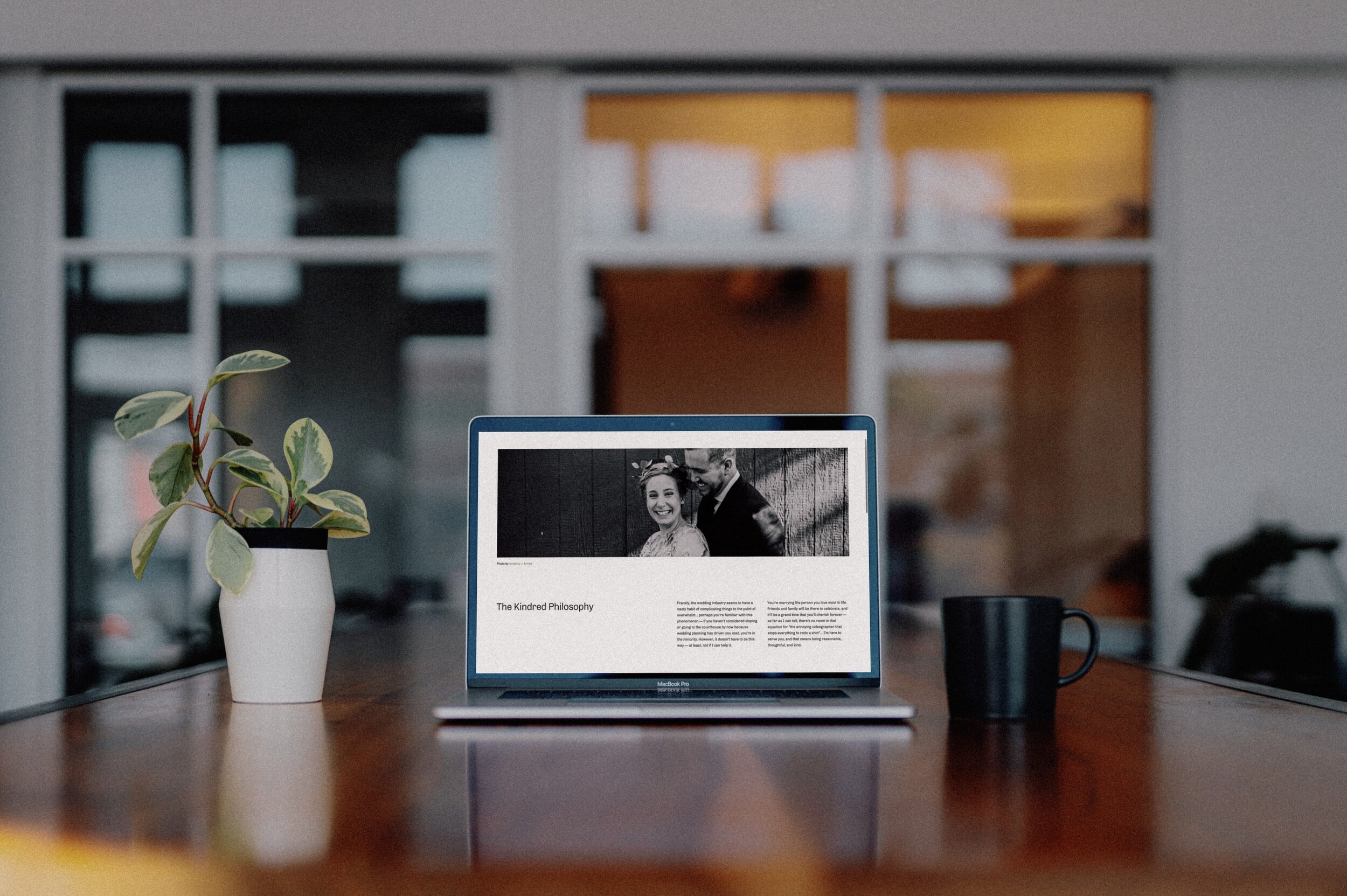
I managed to get Kindred’s site on page one of Google for “Tampa Wedding Videographer” by setting up a template for easy posting of new wedding videos, as blog posts. By continually adding new, useful content, the site became more helpful to the right person’s search, and therefore ranked higher. No magic, no crazy techniques — just effort and time.
3. “Custom sites are so much better”
Having a custom-made site built for your business is a pretty sweet flex on your competition, but… is it really the best solution for the budget, timeline, and return on investment? Likely not. Here’s a simple analogy that has always made things clear for me: Even though a Ferrari is expensive, custom-made, and jaw-droppingly beautiful, is it technically “better” than an SUV for a family of five trying to go to McDonald’s?
Let’s be real: Unless you’ve got a cool $30,000+ burning a hole in your business’ pocket, and absolutely can’t do without a custom-built solution, just stick with a Squarespace site. It’s fast, easy, affordable, and set up for real people to use. It’s got endless free resources to learn from, customer support that’s great to work with, a user interface that’s simple to understand, and dozens of other features that make it the clear hands-down winner in about 99% of use cases.